6 May 2026 · 6 min read
The best time to visit Greece for a private tour
Month by month, what each season actually feels like on a private journey.
There is no single best month to visit Greece — there are only different versions of the country, each with its own light and its own rhythm. The right answer depends on what you came for.
Spring — April to early June
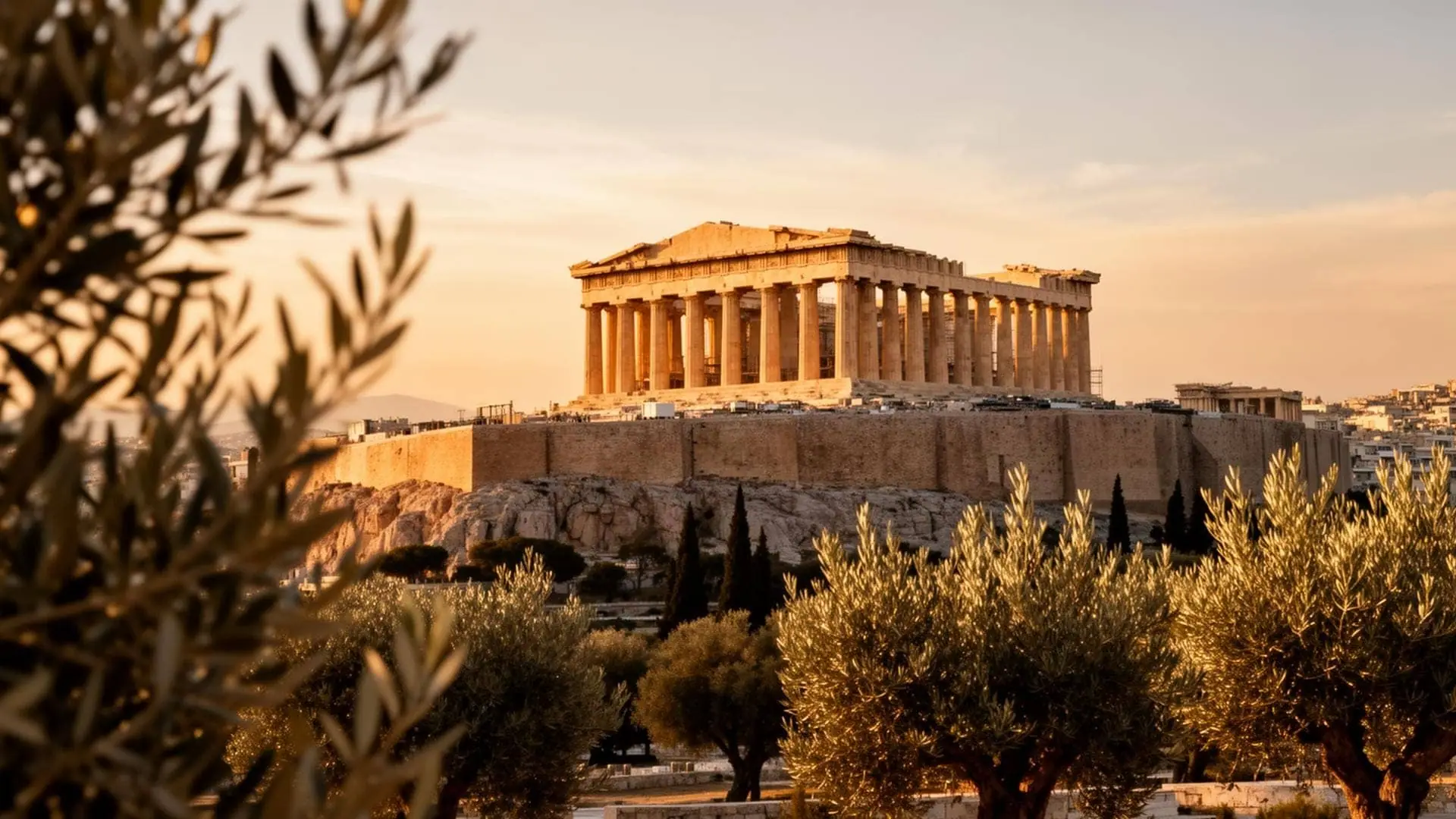
The most rewarding overall window for a private journey. The countryside is green, the wildflowers in the Peloponnese are spectacular, the temperatures are comfortable (18–26°C), and the archaeological sites are at their best — long shadows, soft light, no midday heat at the Acropolis or Delphi.
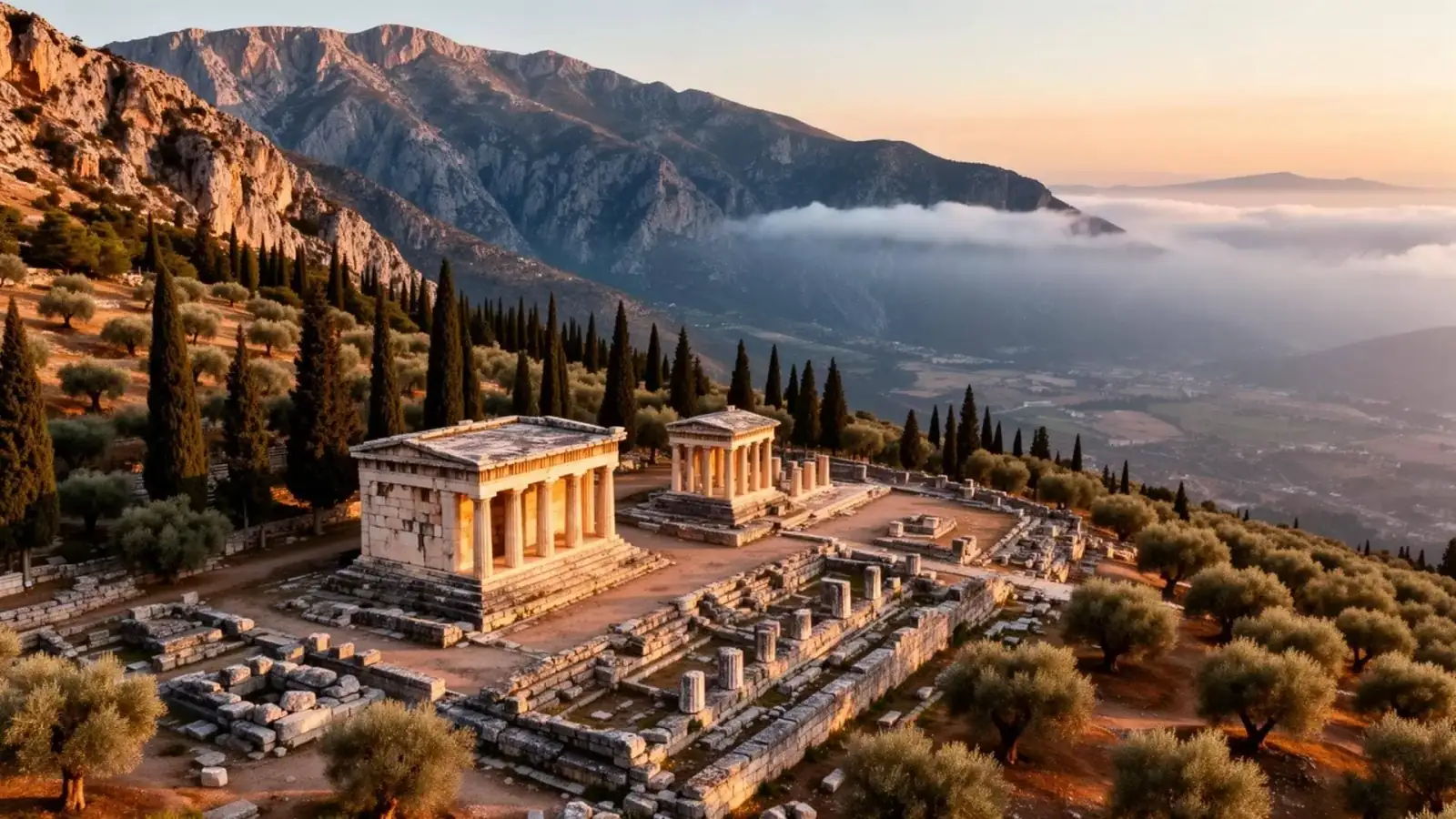
April is genuinely quiet at the major sites. Easter (the date moves) is the most atmospheric week of the Greek calendar, with processions in every village and a sense of national rhythm you cannot manufacture. Early May is our personal favourite for Delphi and Meteora — Parnassus still has snow on the peaks, the light is clean, and the monastery photographs are some of the best of the year.
Summer — late June to August
The peak season. The Acropolis at midday in July is a serious physical challenge — temperatures regularly above 35°C on the rock. Coastal regions (Athens Riviera, Messinia, Ionian) thrive in this season because the sea is the point, but inland sites are best visited at the very start or very end of the day.
For private journeys we shift summer schedules accordingly: 8am pickups for Acropolis and archaeological sites, long Mediterranean lunches in shaded coastal tavernas, late-afternoon resumption. Multi-day journeys lean toward coastal routes (Ionian, Messinia, Mani) where the sea cools the day.
August is the most crowded month — both Greeks and Europeans take holidays. We can still arrange anything, but the magic of "you have the site to yourselves" requires earlier starts.
Autumn — September to early November
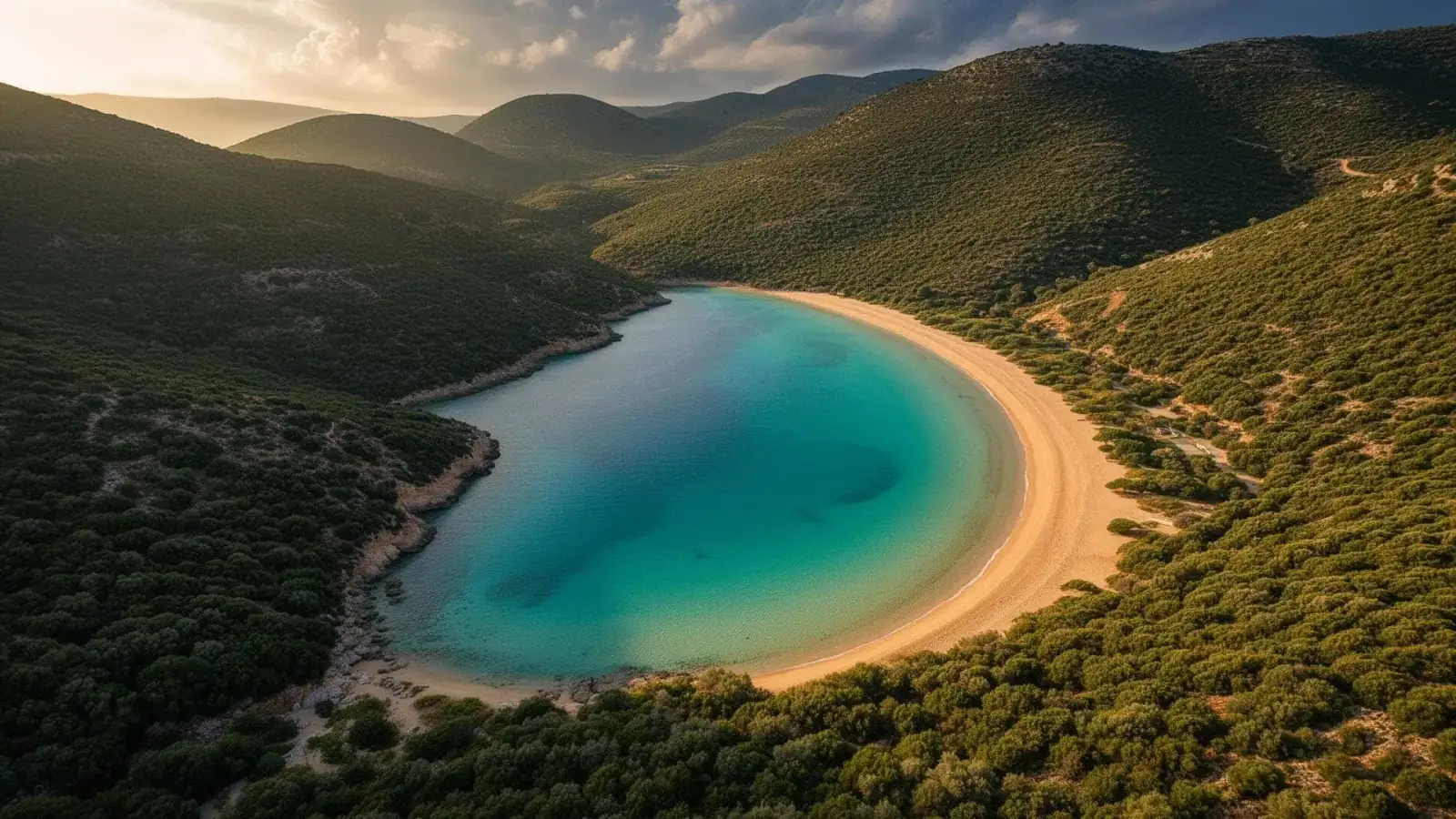
The other genuinely golden window. The sea is still warm enough to swim until mid-October. The light through September is the clearest of the year — photographers' favourite month. Crowds thin meaningfully after the first week of September, and by October the country feels almost private.
October in Meteora is one of the most photographed sequences in mainland Greece — the rocks turn deep orange in the late-afternoon light. October in the Peloponnese is olive-harvest season and our wine partners in Nemea are at their busiest and most welcoming.
Early November is quietly perfect for Athens, Delphi and the Peloponnese — comfortable temperatures, almost no other visitors, restaurants delighted to see you. We do not recommend the islands after late October — most close down.
Winter — December to March
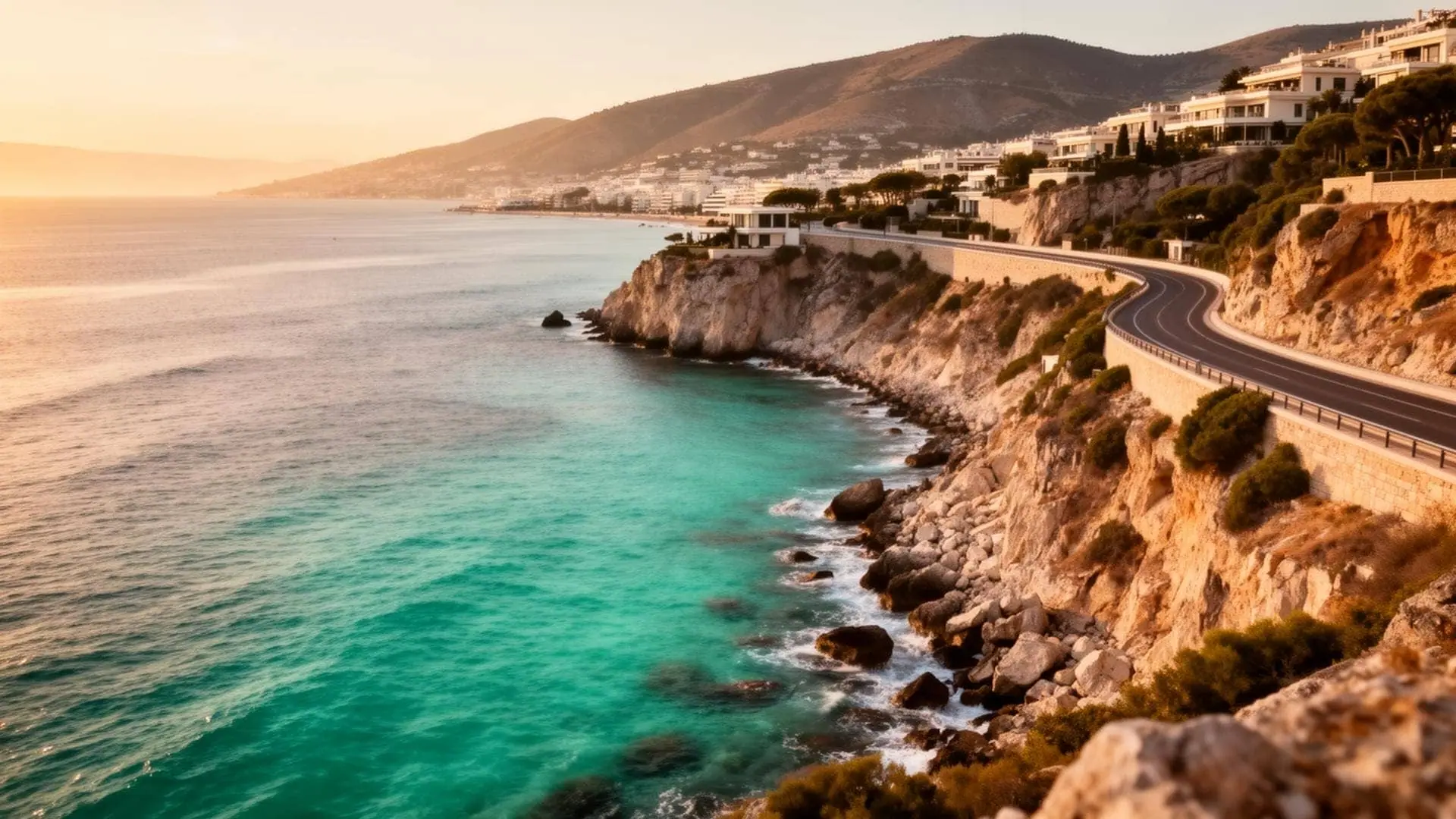
The most underrated season for parts of Greece. Athens in winter is a real city with locals at every café, the Acropolis genuinely uncrowded, and museum visits at their best. Meteora and Arachova are spectacular with snow — a different country from the summer postcard. The southern Peloponnese (Monemvasia, Mani) and the Athens Riviera have mild winters and remain rewarding.
What we do not recommend in winter: islands (closed), mountain hikes (closed trails), and beach-led journeys.
Our short answer
For most first-time visitors with flexibility: late April to early June, or mid-September to early November. For Acropolis-led trips: avoid July–August midday. For coastal Greece: late May to early October. For Meteora photography: October. For Athens as a real city: any month, including winter.
If you tell us what matters most — the light, the silence, the swimming, the food, the festivals — we can usually point to a single best week.
Mentioned in this article
Related private journeys

Ready to design your journey?
Tell us what you have in mind. Reply within 2 hours. No obligation.
Continue reading